What is a Vedic Wedding Ceremony?
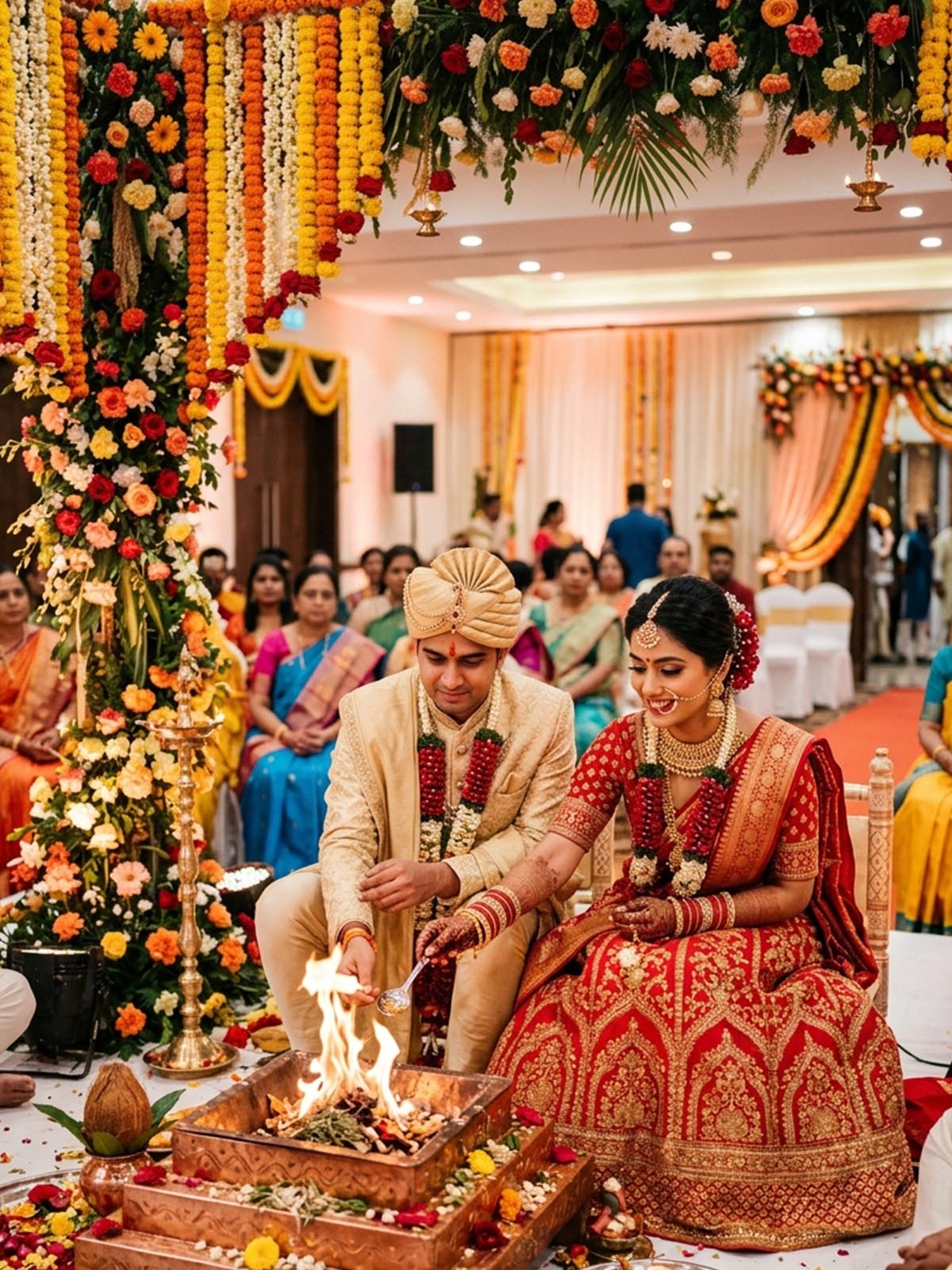
A Vedic Hindu Wedding (Vivah Sanskar) is one of the sixteen sacred Samskaras (rites of passage) in Hinduism. It is a deeply spiritual ceremony that unites two souls not just in this life, but across seven lifetimes. The wedding is performed in the presence of Agni (sacred fire) as the divine witness.
The ceremony includes numerous rituals — from Ganesh Puja and Var Mala to Saptapadi (seven sacred steps) and Sindoor Daan — each carrying deep symbolic meaning and Vedic significance. The mantras chanted during the ceremony invoke the blessings of all deities for the couple's happiness, prosperity, and spiritual growth.
At Prey Pandit, our experienced wedding pandits perform the complete Vivah Sanskar with all traditional rituals, explaining the meaning of each step to the couple and their families.
Wedding Ceremony Samagri
The following items are required for a complete Vedic Wedding Ceremony. Our pandit will provide a detailed list and can arrange the samagri:
- Havan Kund and Havan Samagri
- Ghee, Sesame Seeds, and Barley
- Kalash with Mango Leaves and Coconut
- Gangajal (Holy Water)
- Flowers (Marigold, Rose, Jasmine)
- Kumkum, Turmeric, and Sindoor
- Mangalsutra and Gold Coins
- Sacred Thread (Kalava)
- Panchapatra and Udharani
- Betel Leaves and Betel Nuts
- Coconut and Dry Fruits
- Incense Sticks and Camphor
- Ghee Diyas and Cotton Wicks
- Red and Yellow Cloth
- Aarti Thali with Bell
- Fruits and Sweets
- Janeu (Sacred Thread for Groom)
- Paan Supari and Dakshina
Key Rituals of a Vedic Wedding Ceremony
Our pandits perform all the traditional wedding rituals with proper Vedic mantras and explanations for the couple:
Why Book a Pandit from Prey Pandit for Your Wedding?
Your wedding is a once-in-a-lifetime event. A trained and experienced pandit ensures every ritual is performed correctly and meaningfully:
📜 Complete Vivah Vidhi
Our pandits perform all wedding rituals — from Ganesh Puja to Saptapadi — without omitting any step, as per Vedic tradition.
🗣️ Ritual Explanation
Our pandits explain the meaning of each ritual to the couple and family, making the ceremony deeply meaningful and memorable.
⏰ Shubh Muhurat
Our pandits calculate the most auspicious wedding muhurat based on the couple's birth details for a blessed married life.
🌐 Regional Traditions
Our pandits are familiar with regional wedding traditions (North Indian, South Indian, Bengali, Gujarati, etc.) and can accommodate your customs.
😌 Stress-free Ceremony
Prey Pandit manages all ritual arrangements so the couple and family can focus on celebrating this joyous occasion.
Auspicious Wedding Dates & Muhurat
Hindu weddings are performed on auspicious tithis and nakshatras as per the Hindu calendar. The most favorable months for weddings are Magha, Phalguna, Vaishakha, and Jyeshtha. Weddings are generally avoided during Adhik Maas (extra month), Pitru Paksha, and Chaturmas. Our pandits will calculate the best Shubh Muhurat based on the bride and groom's birth charts (kundali) to ensure a blessed and harmonious married life.
Significance of a Vedic Wedding Ceremony
A Vedic wedding is not just a social event — it is a sacred spiritual union that binds two souls with divine blessings.
Sacred Union
The Vedic wedding creates a spiritual bond between two souls, blessed by Agni (fire) and all the Vedic deities as witnesses.
Divine Blessings
The Vedic mantras invoke blessings from all deities for the couple's health, happiness, prosperity, and long married life.
Family Harmony
The rituals strengthen family bonds and create a foundation of mutual respect, love, and dharma for the new family.
Lifelong Commitment
The Saptapadi (seven vows) create a sacred, unbreakable commitment between the couple for this life and beyond.